Water Damage Categories 1, 2, 3 Explained for Westwood Park
If you are standing in a wet hallway in Westwood Park right now, the first question is rarely about categories. It is usually "how bad is this?" The honest answer depends on where the water came from, how long it has been sitting, and what it has touched on its way through your home. That single distinction drives the cost of cleanup, the safety steps your family needs to take tonight, and whether your homeowners insurance writes a check or denies the claim.
At Westwood Park Water Restoration, we have been answering this exact question on emergency calls across Central Indiana since 2018. As an IICRC Certified, BBB A+ accredited team, we use the same three category system that adjusters, public health departments, and every reputable restoration company in Westwood Park use. Category 1 is clean water. Category 2 is grey water. Category 3 is black water. Those labels sound simple, but the line between them shifts the longer water sits, and most homeowners do not realize their Category 1 leak became a Category 2 problem somewhere around hour 24. This guide answers the questions our Westwood Park customers ask most often, in the order they usually ask them, so you can act with confidence in the next 30 minutes.
Category 1: Clean Water and the Window You Do Not Want to Miss
Category 1 water is what most people picture when they imagine a leak. It comes from a sanitary source, meaning a supply line on your refrigerator, a broken copper line under the kitchen sink, a burst pipe in an exterior wall during a January cold snap in Westwood Park, or an overflowing bathtub with the tap left running. At the moment of release, this water poses no real health threat. You could, in theory, drink it. The trouble is that Category 1 water does not stay Category 1 for long. The IICRC clock generally gives you somewhere between 24 and 48 hours before clean water in contact with building materials, dust, insulation, and bacteria deteriorates into Category 2. In a humid Westwood Park summer, that window shrinks. In a cool, ventilated basement, it stretches a little.
What this means practically is that a clean water loss caught quickly is the cheapest, least invasive scenario you can hope for. Drywall can often be dried in place with air movers and dehumidifiers rather than removed. Hardwood may be saved with mat drying systems. Carpet pad sometimes survives, depending on saturation. If you want a deeper look at how those drying timelines actually play out on a job site, our breakdown of how long water damage takes to dry walks through the equipment and the day by day moisture readings. The mistake we see most often in Westwood Park is homeowners mopping up the visible water, running a box fan for two days, and assuming the job is done. The subfloor and wall cavities are still wet, the category quietly upgrades, and we get the call a week later for a much bigger problem.
The other detail worth knowing about Category 1 is that the source itself can change the picture even when the water looks pristine. A pinhole leak in a copper supply line behind a vanity may have been weeping for months before anyone noticed the warped baseboard, and at that point the moisture has already migrated into the wall cavity and across the subfloor toward the next room. We carry thermal imaging cameras and pinless moisture meters on every Westwood Park Water Restoration truck for exactly this reason, because the visible footprint of a clean water loss is almost always smaller than the actual wet footprint behind the finishes.
Category 2: Grey Water and Why It Is Not Just Dirty Clean Water
Category 2, or grey water, contains significant contamination and can cause illness if ingested or if it sits on skin and mucous membranes long enough. The classic sources are washing machine discharge lines, dishwasher overflows, toilet overflows that contain only urine and no solids, aquarium breaks, waterbed failures, and condensate line backups from HVAC systems. Sump pump discharge that has picked up soil bacteria from the pit also tends to land here. Any Category 1 loss that sits longer than about 48 hours, or that has traveled through contaminated building materials, becomes Category 2 by default.
The cleanup standard changes meaningfully at this stage. Porous materials that absorbed grey water, things like carpet pad, particle board, drywall below the waterline, and insulation, generally have to be removed and discarded rather than dried in place. Antimicrobial treatment becomes part of the protocol, not an optional add. The contents of the affected space, from baseboards to stored boxes, get evaluated individually. We have written a more focused walkthrough of Category 2 grey water cleanup for homeowners who want the exact step by step, but the short version is this: grey water is the category where insurance adjusters start asking sharper questions, and where do it yourself cleanup stops being a defensible choice. Your homeowners policy may still cover the loss in full, depending on the source, but the documentation has to be tight.
Grey water also tends to surprise people because of where it hides. A dishwasher that overflows during a cycle pushes water under the cabinet kickplate and into the toe space, where it sits against particle board until the bottom of the cabinet sags weeks later. A washing machine supply hose that fails on the second floor drives grey water through the floor system and into ceiling cavities below. By the time the homeowner spots a stain on the dining room ceiling, the insulation above is saturated and bacterial growth is already underway. Treating these losses correctly means opening the ceiling and confirming dryness with instruments, not eyeballing it.
Category 3: Black Water and Why You Should Not Be in the Room
Category 3 is the one that scares us, and it should scare you. Black water is grossly contaminated and contains pathogens, raw sewage, regulated chemicals, or floodwater that has traveled across the ground outside. Sewer line backups through floor drains, toilet overflows containing fecal matter, rising water from a creek or storm event in Westwood Park, and any long standing Category 2 loss that has begun to grow visible microbial colonies all qualify. The health risks are real: hepatitis, E. coli, giardia, and a long list of less famous pathogens travel in this water.
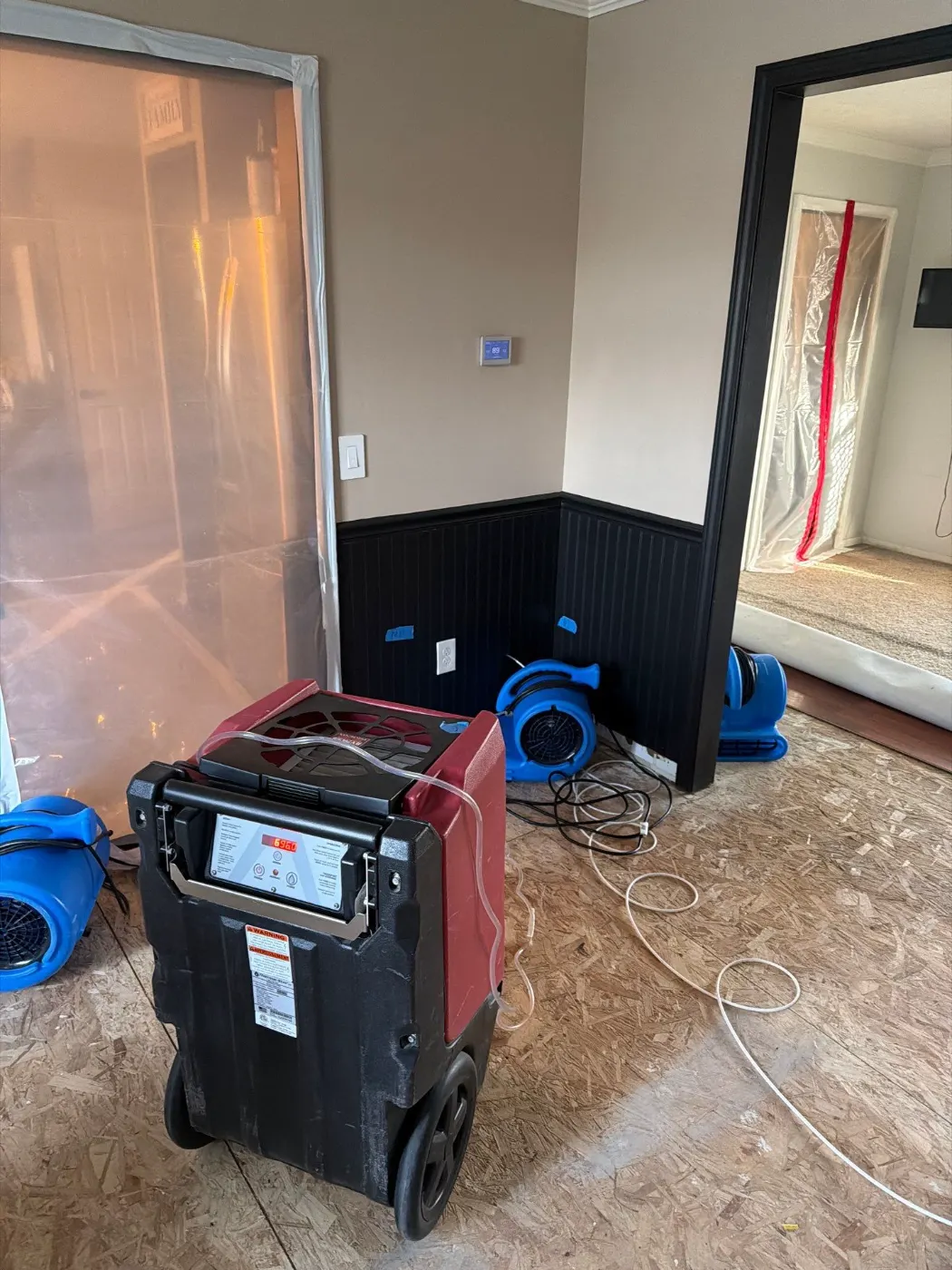
The restoration protocol changes top to bottom. Crews work in personal protective equipment that includes respirators, full coveralls, and gloves rated for biohazard exposure. Affected porous materials are not negotiable, they come out. Subfloor often has to be replaced. Containment barriers go up to keep airborne contamination from spreading to unaffected parts of the home, and HEPA air scrubbers run throughout the job. If your loss involves a sewer backup or storm intrusion, our dedicated pages on sewage cleanup and storm driven water entry will give you a clearer picture of what the work actually involves. This is also the category where the gap between a cheap quote and a thorough quote tends to be widest, because cutting corners on Category 3 means leaving contamination in the home.
The hardest conversations we have with Westwood Park homeowners during a Category 3 loss involve sentimental contents. Photo albums, upholstered furniture, mattresses, children's stuffed animals, and anything else porous that came into direct contact with black water cannot be safely restored, no matter how careful the cleaning. Hard, non porous items can often be salvaged through detailed disinfection, and Westwood Park Water Restoration works with specialty contents vendors who handle electronics, fine art, and documents through processes like ozone treatment and freeze drying. Knowing what can stay and what has to go is part of why a qualified restoration firm earns its keep on these losses.
Get the right answer for your specific situation
Categories matter, but what matters more is getting eyes on your loss tonight before clean water turns grey or grey water turns black. If you are in Westwood Park and you are not sure what category you are dealing with, call Westwood Park Water Restoration. We will walk through it with you on the phone, dispatch a certified technician for a free on site assessment, and give you a straight answer about scope, cost, and what your insurance is likely to cover.
How the Category Affects Your Claim and Your Cost
Insurance carriers price these losses very differently. A Category 1 kitchen leak caught in twelve hours might run a few thousand dollars in mitigation. The same leak ignored for five days, now Category 2 with mold colonization beginning, can climb past ten thousand quickly. A Category 3 sewage event involving a finished basement in Westwood Park routinely runs into the tens of thousands once demolition, disinfection, drying, and rebuild are included. Honest categorization matters because under classifying a loss means the cleanup fails and you pay twice. If we walk your home and find that what looks like Category 3 is actually a contained Category 1, we will tell you directly, and the invoice will reflect it.
Frequently Asked Questions
How quickly does Category 1 water become Category 2 in a Westwood Park home?
Generally within 24 to 48 hours, faster in warm or humid conditions. Once clean water sits in carpet pad, drywall, or subfloor, bacteria begin multiplying and the category degrades. That is why Westwood Park Water Restoration pushes for same-day response on every Westwood Park water call.
Does homeowners insurance cover all three water damage categories?
Most Westwood Park policies cover sudden and accidental losses regardless of category, but sewage backup usually requires a specific rider, and gradual leaks are often excluded. Westwood Park Water Restoration documents the source and category clearly so your adjuster can apply the right coverage. Our blog on insurance coverage breaks this down further.
Can carpet be saved after Category 2 water damage?
Sometimes, if we reach it within 24 hours, the pad is removed, and the carpet is professionally extracted, cleaned, and treated with an EPA-registered antimicrobial. Beyond 24 hours, or with any Category 3 exposure, IICRC standards require removal. Westwood Park Water Restoration will tell you honestly which path applies.
What makes water Category 3 instead of Category 2?
Source and contamination level. Sewage, toilet overflows past the trap, rising groundwater, and water that has been sitting long enough to grow microbial colonies all qualify as Category 3. It poses a real health risk and requires controlled demolition of affected porous materials in any Westwood Park property.
How much does Category 3 cleanup typically cost in Westwood Park?
Most Category 3 mitigation jobs Westwood Park Water Restoration handles in Westwood Park run between $7,000 and $20,000 depending on square footage, demolition scope, and contents loss. Sewer backup riders on homeowners insurance usually cover the bulk of it. We provide written estimates before work begins.
Have a restoration question?
Our IICRC certified Westwood Park crew is ready to help. Free assessments, estimate based on what we can sees, no pressure.