Washing Machine Flood in Westwood Park: Repair Steps
A washing machine flood hits fast. One minute you are folding towels, the next you are standing in two inches of water with the supply hose spraying the laundry room wall. If this is happening right now in your Westwood Park home, shut off the water supply valves behind the unit, kill power at the breaker, and call Westwood Park Water Restoration for emergency extraction.
Washing machines push 15 to 30 gallons per cycle through hoses that are often a decade past their replacement date. When a hose bursts, a pump seal fails, or the drain line backs up, the water does not stop until you stop it. We see this every week across Westwood Park, from finished basements where the laundry sits next to a media room to second floor laundry closets that drip through ceilings into living rooms below.
This guide is built for the homeowner who needs answers right now. You will get a clear action list, real cost ranges from Westwood Park jobs, the IICRC standards your restoration company should follow, and the exact language to use when you file your insurance claim. Westwood Park Water Restoration has been handling washing machine floods across central Indiana since 2018, we are BBB A+ rated and IICRC certified, and if we cannot help with your specific situation, we will tell you directly.
Why Washing Machine Floods Cause More Damage Than You Think
A washing machine sits on a finished floor, often on the main level or in an upstairs laundry closet, which means gravity becomes your enemy the moment the leak starts. A failed inlet hose can release water at roughly six gallons per minute under full household pressure, and most homeowners do not catch the problem for fifteen to thirty minutes if the unit was running unattended. That math puts ninety to one hundred eighty gallons on your floor before anyone notices. In a Westwood Park home with hardwood floors, a forty year old subfloor, or a finished basement directly beneath the laundry room, that volume is enough to warp planks, delaminate engineered flooring, and saturate the ceiling drywall below. We have pulled appliances in Westwood Park homes where the homeowner mopped up the visible water in twenty minutes and assumed the problem was solved, only to call us four days later when the baseboards started bubbling and the room began smelling like a wet basement. Water moves through capillary action long after the surface looks dry, which is why IICRC Category 2 and Category 3 losses almost always require professional moisture mapping rather than a household shop vac. The other factor people underestimate is how quickly water finds the path of least resistance, slipping under door thresholds, traveling along floor joists, and pooling inside wall cavities where no towel will ever reach it. By the time visible signs appear in an adjacent room, the structural materials behind that drywall have often been wet for days.
What Professional Repair Includes and What It Costs
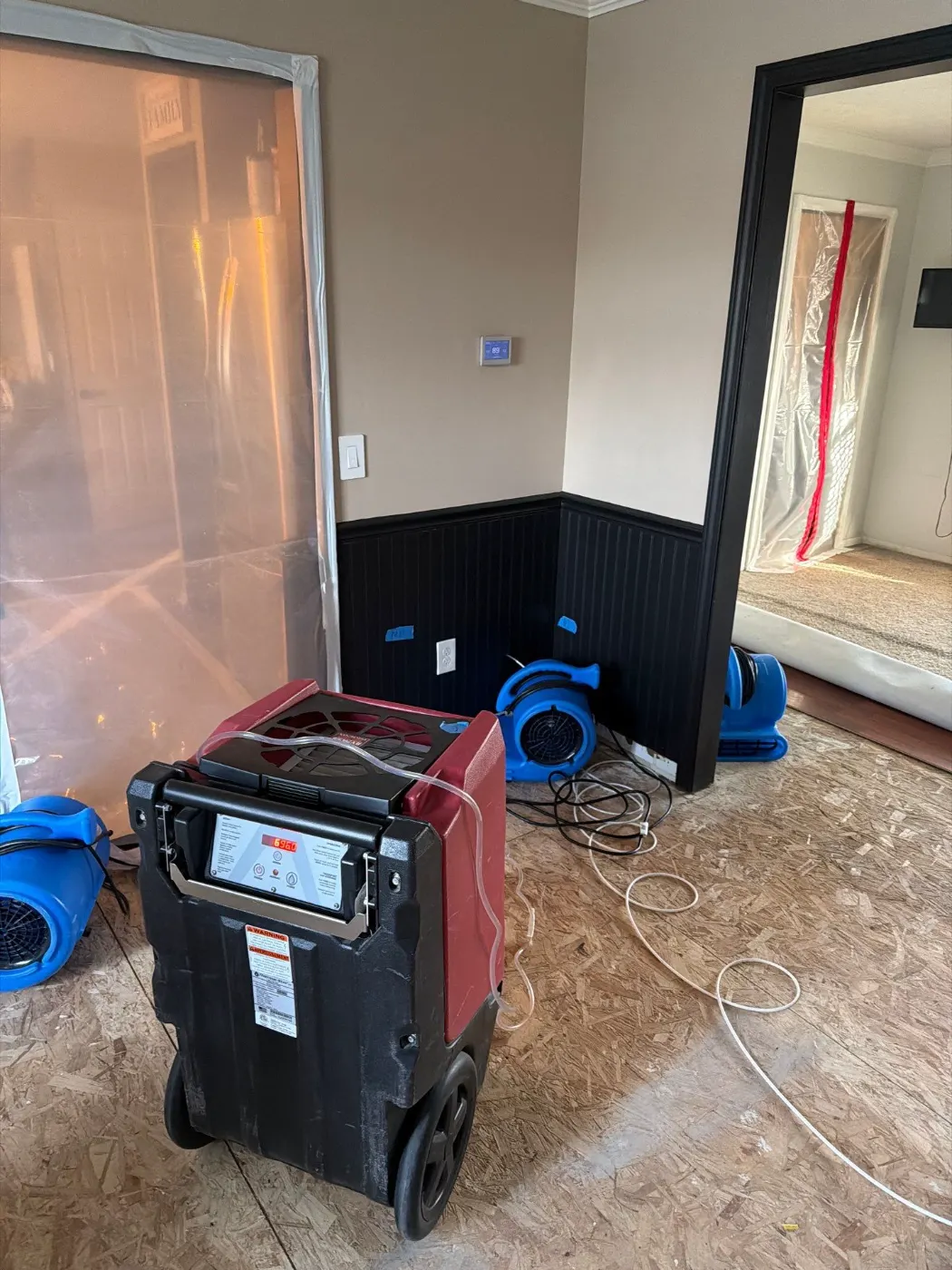
A standard washing machine flood response in Westwood Park runs in three phases. The first is extraction and stabilization, where we remove standing water, pull baseboards if needed, drill weep holes in drywall to release trapped moisture, and set commercial dehumidifiers and axial air movers. The second is structural drying, which usually takes three to five days depending on how far the water traveled and what materials were affected. We monitor moisture readings daily and adjust equipment placement, because drying is not finished when the surface feels dry, it is finished when the wood, drywall, and subfloor return to the dry standard for your home. The third phase is reconstruction, which can mean replacing a section of laminate flooring, hanging new drywall in a finished basement ceiling, or refinishing hardwood that cupped but did not crack. Costs vary widely. A contained leak caught quickly might run nine hundred to two thousand dollars for mitigation alone. A flood that reached a finished basement below the laundry room, soaked carpet, and damaged ceiling drywall typically lands between four thousand and twelve thousand dollars when you include reconstruction. We break this down in more detail in our water damage restoration cost guide, but every Westwood Park job gets a written estimate before work begins, and if we cannot help you, we will tell you directly. Cabinetry next to the washer is another wildcard, because particleboard bases swell and lose structural integrity within hours of contact with water, and replacing a laundry room vanity or built in storage tower can add another fifteen hundred to three thousand dollars depending on finish quality. We try to salvage cabinet boxes when readings allow, but honesty about what can and cannot be saved protects you from paying twice for the same repair.
The First Hour: What You Should Actually Do
Before anything else, shut off the water supply valves behind the machine and kill power at the breaker, not just the appliance switch. Standing water and live electrical circuits are a combination we still see homeowners ignore, and a wet outlet behind a pedestal washer is a real hazard. Once power and water are off, pull the machine forward if you can do it safely and look at the hose connections, the pump area, and the floor behind the pedestal. Document everything with your phone before you start cleanup, because your insurance adjuster will want photos of the source, the standing water, and any visible damage to flooring, cabinetry, and walls. Move laundry baskets, rugs, and anything porous out of the affected area. If water has traveled into adjacent rooms or down through a ceiling, do not try to handle extraction with towels. A truck mounted extractor pulls water out of carpet pad and subfloor at a rate household equipment cannot match, and the longer saturated materials sit, the higher your repair bill climbs. Mold colonization begins within twenty four to forty eight hours in the right conditions, so the window for affordable mitigation is short. Our emergency water removal team typically arrives at Westwood Park addresses within sixty to ninety minutes of your call, and we bring meters, extractors, and air movers on the first truck rather than scheduling a second visit. If you have a ceiling that is sagging or actively dripping below the laundry room, place a bucket and puncture a small relief hole at the lowest point of the bulge to control the release rather than letting the entire panel fail at once.
Insurance, Claims, and What to Watch For
Most homeowners policies cover sudden and accidental water discharge from an appliance, which is exactly what a burst supply hose or failed pump qualifies as. What is usually not covered is long term seepage, gradual leaks, or damage caused by a unit that was already malfunctioning and ignored. When you call your carrier, describe the event as sudden, give the time you discovered it, and request a claim number before any major work begins. Save the damaged hose or part if you can, because the adjuster may want to see it. Westwood Park Water Restoration works directly with most major carriers in Central Indiana, and we document moisture readings, photo logs, and scope notes in the format adjusters expect. That documentation matters, because incomplete paperwork is the most common reason claims get reduced or denied. If your loss involves contaminated water from a backed up drain line, the situation shifts into Category 2 or 3 territory and may overlap with our full water damage restoration service, which carries different protocols for sanitization and material removal. Honest scoping protects you on both sides of the claim. One last note for Westwood Park homeowners filing their first appliance claim: deductibles often run between one thousand and twenty five hundred dollars, so a small contained leak may not be worth filing if mitigation falls under that threshold. We will help you weigh that decision before you make the call, because a claim filed and then withdrawn still shows up on your loss history and can affect future premiums. Replacing braided stainless inlet hoses every five years and shutting off supply valves before extended trips remains the cheapest insurance policy you can buy.
Get Your Westwood Park Home Dry the Right Way
A washing machine flood is not the end of your floors or your week, but the clock is real. Every hour wet materials sit, the repair scope grows and the category rating climbs. Westwood Park Water Restoration answers the phone 24 7 across Westwood Park and central Indiana, brings IICRC certified crews and commercial drying equipment, and works directly with your insurance carrier so you are not playing middleman. If we cannot help with your specific situation, we will tell you that on the first call and point you toward someone who can.
Frequently Asked Questions
How fast does Westwood Park Water Restoration respond to a washing machine flood in Westwood Park?
We dispatch 24/7 and typically arrive within 60 to 90 minutes anywhere in the Westwood Park area. Faster response means less damage and a smaller insurance claim.
Will my homeowners insurance cover the washing machine flood?
Most Westwood Park policies cover sudden and accidental water damage from appliances. Gradual leaks and lack of maintenance are usually excluded. Westwood Park Water Restoration provides the documentation adjusters require.
How long does drying take after a washing machine leak?
Most cases dry in 3 to 5 days with professional equipment. Floods that traveled through ceilings or into wall cavities may take 5 to 7 days, confirmed by daily moisture readings.
Do I need to replace my flooring after a washer flood?
It depends on the flooring type and water category. Laminate usually fails. Solid hardwood can sometimes be saved if dried fast. Vinyl plank often survives. Westwood Park Water Restoration assesses each case individually.
What is the average cost to repair washing machine water damage?
In Westwood Park, most jobs run between $1,500 and $5,500 depending on the affected square footage, water category, and whether the ceiling below was involved. Larger losses can exceed $10,000.
Have a restoration question?
Our IICRC certified Westwood Park crew is ready to help. Free assessments, estimate based on what we can sees, no pressure.